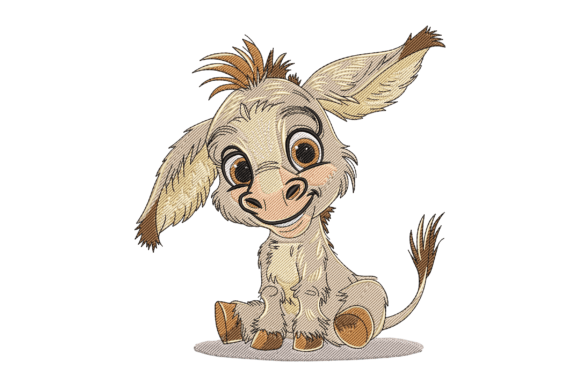
Cute Baby Donkey
A Playful, Polished Silhouette — Not Just Another Farm Animal Clipart
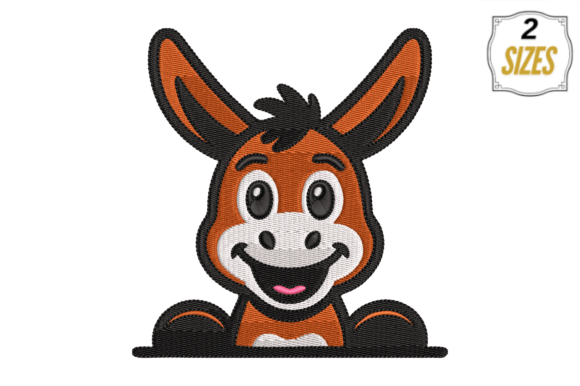
First impression? Cute Baby Donkey lands with gentle confidence—not cutesy overload, not overly literal. It’s got soft curves, a slightly tilted head, and expressive ears that suggest curiosity rather than cartoonish exaggeration. The proportions feel intentional: compact enough for a 4x4 hoop, but with breathing room in the limbs and face to avoid crowding when stitched. As a machine embroidery design, it reads clearly at a glance—no visual noise, no confusing layering—and that matters more than you’d think when you’re stitching 30 custom baby onesies before a weekend craft fair.
Where It Shines: Real Projects, Real Customers
I tested Cute Baby Donkey on a natural linen tea towel (medium-weight, low stretch) and a midweight cotton sweatshirt—both common staples for small shop owners and Etsy sellers. On the towel, the design held crispness in the satin-stitched muzzle and the subtle fill-stitch shading along the back. On the sweatshirt, it stayed legible even with moderate fabric texture, especially when paired with a lightweight cutaway stabilizer. That’s key: this isn’t a design that vanishes into fleece or blooms awkwardly on terry cloth.
It works beautifully as a personalized gift—think embroidered baby blankets or onesie sets where warmth and charm matter more than technical flash. I also stitched it onto a canvas tote bag for a local nursery boutique; customers paused, smiled, and asked, “Is that hand-drawn?” That kind of reaction builds trust in your handmade product. It doesn’t scream “mass-produced embroidery file”—it feels considered, like part of a cohesive collection, not a standalone novelty.
Where to Pause Before Pressing Start
Cute Baby Donkey is forgiving—but not magic. On thin or highly stretchy fabrics (like jersey baby bodysuits), skip the running stitch outlines unless you’re using tear-away + topping. The ears and hooves have fine tapered ends; those can blur or fray if stabilizer choice or tension isn’t dialed in. And while it scales well down to ~3.2”, don’t push it below that for apparel—you’ll lose definition in the eye and muzzle details.
Curved surfaces (caps, bucket hats) need careful hooping and possibly reduced density in the fill areas—otherwise, the shape can distort slightly at the crown seam. Also, avoid placing it directly over seams or darts without testing first. I learned that the hard way on a set of aprons: one piece puckered subtly near the waistband because the design crossed a folded edge. A quick mockup would’ve caught it.
Color & Contrast: Your Quiet Branding Tool
This design thrives on thoughtful thread colors—not just contrast, but character. On oatmeal linen, a warm taupe satin stitch for the body + cream for the belly creates quiet sophistication. On navy sweatshirts, charcoal gray with off-white accents reads modern, not juvenile. Skip neon or metallics unless you’re intentionally going bold; Cute Baby Donkey’s strength is its approachability, and clashing threads undercut that. Always test thread colors on scrap fabric under natural light—what looks balanced on screen can flatten or muddy in stitch.
Commercial Use? Yes—But Verify First
As a craft business owner or digital embroidery file seller, know this: Cute Baby Donkey fits neatly into a themed bundle—Farm Animals, yes, but more specifically *gentle farm motifs* for nurseries, baby showers, or rustic kitchen decor. It pairs naturally with simple wheat sprigs, cloud shapes, or minimalist barn silhouettes. But before listing it as part of your own commercial embroidery collection—or selling finished products featuring it—confirm licensing terms. The description says “machine embroidery,” but doesn’t clarify personal vs. small-batch commercial rights. When in doubt, reach out to the source or choose alternatives with explicit terms.
Practical Designer Notes You’ll Actually Use
- Always stitch a test—on the exact fabric + stabilizer combo you’ll use for the final run.
- Check stitch density in the belly and ear areas; dense fills on lightweight fabric can cause stiffness or shadowing.
- Review small details in the eye and nostril: do they hold cleanly at your intended size? Zoom in on your embroidery software.
- Test black-and-white mockups—Cute Baby Donkey relies on shape and rhythm more than intricate line work, so it holds up well in monochrome branding or printable mockups.
- Compare light/dark backgrounds side-by-side; the design’s balance shifts subtly depending on contrast, especially around the muzzle outline.
- Use proper stabilizer: medium-weight cutaway for knits, tear-away for stable wovens, and always a light topping for textured surfaces like terry or bouclé.
- Confirm hoop size compatibility before committing to a large batch—some versions may be optimized for 5x7, others for 4x4.
Why This Design Earns Repeat Use
Cute Baby Donkey doesn’t try to be everything. It’s not hyper-detailed like a photorealistic animal portrait, nor is it so minimal it fades into background noise. It occupies that sweet spot: recognizable, reproducible, and quietly distinctive. For Etsy sellers, it adds charm without overwhelming a product photo. For baby embroidery, it feels tender—not saccharine. For holiday embroidery or wedding gifts (think: “Baby’s First Christmas” ornaments or guestbook pillows), it brings warmth without seasonal cliché.
Most importantly, it stitches cleanly across machines—no frequent thread breaks, no excessive jump stitches, no nested trims that gum up your bobbin. That reliability saves time, reduces waste, and keeps your workflow steady when juggling client deadlines or craft fair prep. In the end, Cute Baby Donkey isn’t just another embroidery design. It’s a dependable, expressive tool—one that helps your handmade product feel intentional, your personalized gift feel heartfelt, and your small shop product feel like it belongs on a curated shelf, not a clearance rack.