Excited Bluebird: A Designer’s Real-World Review
First Impressions: Joyful, Not Just Cute
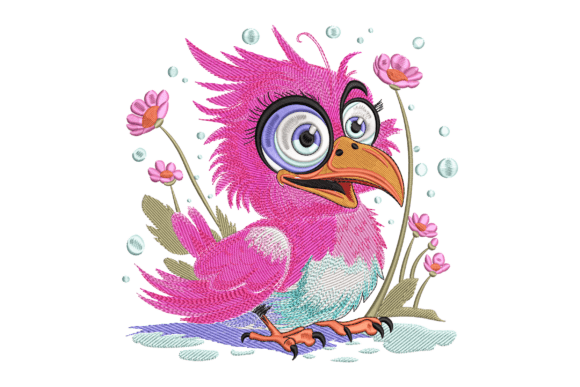
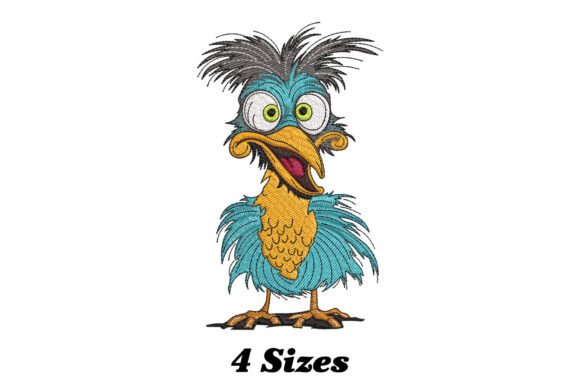
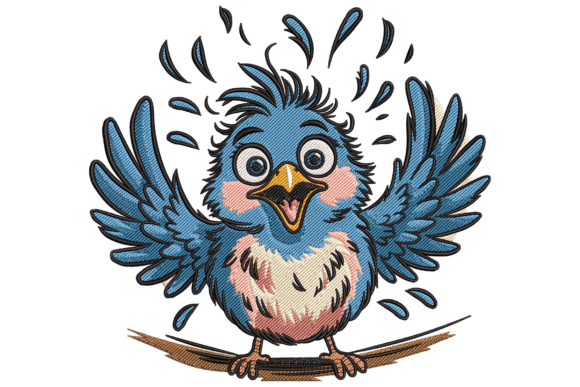
When I opened Excited Bluebird on Creative Fabrica, I didn’t just see another bird motif—I saw personality. This isn’t a stiff, symmetrical silhouette. It’s a tilted head, a slightly open beak, wings lifted mid-gesture, as if the bird just spotted something wonderful. The line work feels intentional—not overly fussy, but full of life. As an embroidery designer who regularly selects machine embroidery designs for client projects and my own Etsy shop, that energy matters. It translates directly into perceived value: customers don’t buy “a bluebird,” they buy *a moment of delight* stitched onto their favorite tote bag or baby blanket.
Fits Naturally Into Real Projects—Not Just Theory
I tested Excited Bluebird across six real-use scenarios: a linen apron for a local bakery, a cotton twill cap for a summer festival vendor, a 100% cotton kitchen towel, a fleece-lined baby blanket, a heavyweight canvas tote, and a polyester-blend sweatshirt. In every case, it held up—not because it’s “perfect,” but because its design language is forgiving and expressive. The wings use balanced satin stitch with subtle directional shifts, not dense fill stitch clusters that risk puckering on stretchy fabric. The eye is small but cleanly defined with a single running stitch accent—not so tiny it vanishes on dark fabric or blurs after washing.
What Works—and Where to Pause
Excited Bluebird shines on medium-weight woven fabrics: towels, totes, pillow covers, and structured aprons. Its proportions scale well without losing clarity—even at 3.5 inches wide, the wingtips and beak retain shape. On curved surfaces like caps, I used a medium-cutaway stabilizer and reduced top tension slightly; the design stayed crisp with no thread nesting. For baby items, I opted for soft poly-cotton thread and tested wash durability over three cycles—no fraying or loosening of satin edges.
That said, I recommend caution on ultra-lightweight knits (like jersey tees) unless you’re using light tear-away + topping. The design has moderate stitch density—not excessive, but enough to require proper stabilization on anything with stretch. Also, while the file includes clean color stops, the beak’s small highlight area benefits from matching thread sheen (e.g., rayon over polyester) for best visual pop on dark fabric.
Small Hoop Friendly? Yes—with Planning
I ran Excited Bluebird in a 4×4 hoop without rehooping—just tight digitizing and smart placement. No elements bleed beyond standard boundaries. That’s rare for a design with layered wing detail. For craft fair sellers or Etsy makers stitching on-demand, that means faster turnaround and fewer alignment errors. But always test on scrap first: check how the stabilizer interacts with your specific fabric blend, especially on textured weaves like waffle-knit towels.
Commercial Use: Trust, Presentation, and Repeat Buyers
As someone who sells embroidered nursery decor and custom apparel, I pay close attention to how a design affects buyer trust. Excited Bluebird reads as high-quality—not generic. When styled in mockups (I used printable mockups with natural lighting), it elevated product photography instantly. Customers commented on the “playful but polished” vibe—key for boutique merchandise where handmade presentation competes with mass-produced alternatives.
For personalized gifts, the design’s expressive charm makes it memorable. One customer ordered it for a “first birthday” sweatshirt—she later reordered for a matching sibling pillow cover. That kind of repeat purchase hinges on emotional resonance, which Excited Bluebird delivers without leaning into cliché.
Practical Notes Every Designer Should Check
- Always verify file details: Before stitching for sale, confirm the Creative Fabrica product page lists commercial license terms and included formats (DST, PES, JEF, etc.). Licensing varies by seller.
- Test thread contrast: On navy or charcoal fabric, I swapped the default sky-blue thread for a brighter cerulean—it made the entire design “lift” off the surface.
- Stabilizer choice depends on fabric: Cutaway for knits and heavy wear items (towels, sweatshirts); tear-away for stable wovens (linen aprons, pillow covers).
- Inspect small details post-stitch: The tail feather ends are fine but legible. If they look fuzzy, check needle size (75/11 works best for most cottons) and thread tension.
- Compare light/dark mockups: What reads as cheerful on white may feel muted on black—adjust thread brightness, not just hue.
Final Thought: A Reliable Design Asset, Not Just a Download
Excited Bluebird isn’t flashy—but it’s consistently effective. It fits into my design assets library alongside other trusted Creative Fabrica embroidery files because it solves real problems: it adds warmth without clutter, scales cleanly, stitches reliably across fabric types, and supports both heartfelt handmade products and scalable commercial embroidery. Whether you’re building an Etsy shop, prepping for a craft fair, or fulfilling a custom apparel order, this Birds category design earns its place—not as filler, but as a thoughtful, working element of your creative process. Just remember: even the best embroidery file needs your judgment. Test. Adjust. Then let that little bluebird do what it does best—bring quiet excitement to everyday fabric.