Rabbit Cartoon: A Charming, Practical Embroidery Design
First Impressions: Whimsy That Stitches Well
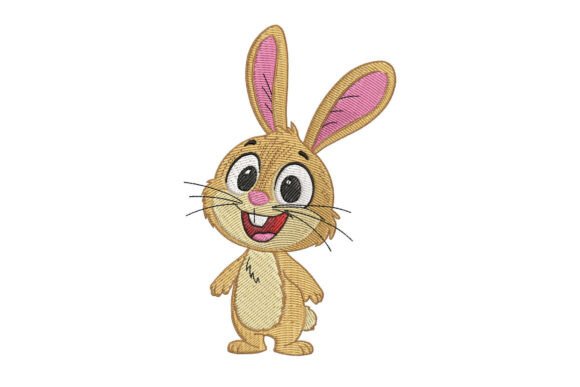
When I opened Rabbit Cartoon for the first time, I didn’t see just another farm animal motif—I saw a design with quiet confidence. It’s not overly cutesy or cartoonishly exaggerated; instead, it balances rounded simplicity with expressive charm. The rabbit’s posture—slightly tilted head, soft ears framing its face—feels approachable and friendly without leaning into saccharine territory. As an embroidery designer who’s stitched hundreds of animal motifs, I immediately noticed how its clean silhouette and intentional negative space translate well to thread: no frantic detail overload, no fragile limbs that vanish under satin stitch, no tiny eyes lost in fill stitch density. It reads clearly at 3–4 inches wide—the sweet spot for tote bags, baby onesies, and tea towels.
A Real-World Test: Stitching It on a Linen Kitchen Towel
Last week, I used Rabbit Cartoon on a natural linen kitchen towel for a small-batch boutique order. Why linen? Because it’s unforgiving—loose weave, subtle slubs, zero stretch—and if a design can hold up there, it’ll handle most real-world fabrics. With medium-weight cutaway stabilizer and a 75/11 needle, the rabbit stitched cleanly. The ears held crisp definition, the cheek curve stayed smooth (no puckering), and the whiskers—delicate running stitches—remained visible without fraying. Customers loved how it looked: handmade but polished, playful but not juvenile. That’s Rabbit Cartoon’s quiet strength—it elevates a simple item without shouting.
Where It Shines (and Where It Needs Care)
Rabbit Cartoon works beautifully across several high-demand categories:
- Custom apparel: On cotton sweatshirts and structured tote bags, its balanced proportions prevent distortion—even on slightly curved seams.
- Baby embroidery: Its gentle expression and lack of sharp angles make it ideal for onesies, burp cloths, and nursery pillow covers. Parents consistently respond to its warmth and calm energy.
- Holiday and gift embroidery: Paired with a simple “Hop Into Spring” or “Bunny Love” text block, it adds personality to Easter baskets, teacher gifts, or new-baby bundles—without needing seasonal clichés.
- Small shop merchandise: As a standalone embroidered patch or iron-on applique design, it scales well for Etsy listings and craft fair displays. Its recognizability helps build repeat recognition for handmade product lines.
But let’s be realistic—Rabbit Cartoon isn’t magic. Use caution on:
- Thin or highly stretchy fabric (like lightweight jersey): The design’s moderate stitch density needs stable backing. Always test with tear-away + light cutaway on knits.
- Dark fabric without contrast testing: Those soft ear contours rely on thread color nuance. I recommend stitching a black-and-white mockup first to assess tonal separation before committing to navy or charcoal.
- Curved surfaces like caps or beanies: While it fits standard front-embroidery cap hoops, avoid placing it near the bill curve unless you’ve verified hoop clearance and digitizing flexibility.
- Tiny hoop sizes under 4”x4”: At reduced scale, some interior details (like the subtle nose curve) may compress. Check the original embroidery file’s minimum recommended size before resizing.
What It Adds to Your Finished Product—Beyond Cuteness
Rabbit Cartoon quietly lifts perceived value. On a plain cotton apron? It transforms utility into personality. On a personalized baby blanket? It signals care—not just stitching, but thoughtful curation. For Etsy sellers, that translates directly to higher conversion: customers don’t just buy a rabbit—they buy a cohesive, ownable moment. Its farm animal roots feel grounded and timeless, not trend-dependent, which supports long-term brand consistency for craft businesses building signature collections. And because it avoids heavy fill areas or dense satin borders, it stitches quickly and reliably—critical when fulfilling custom apparel orders or holiday batches.
Designer Notes You’ll Actually Use
Before stitching Rabbit Cartoon on your next project, do these five things:
- Test on scrap fabric *with your exact stabilizer and thread*—linen behaves differently than terry cloth, which behaves differently than fleece.
- Review stitch density visually: look for any tight clusters that could cause stiffness or thread breakage on delicate items like baby clothes.
- Confirm hoop size compatibility—especially if layering with text or combining with other embroidery files in one layout.
- Inspect small features (whiskers, inner ear line) at actual stitch-out size—not just on screen. What looks fine digitally may vanish in thread.
- Check licensing terms carefully. If you’re selling finished products or digital embroidery files commercially, confirm whether Rabbit Cartoon permits commercial embroidery use or requires attribution.
Final Thought: A Reliable, Human-Centered Design Asset
Rabbit Cartoon isn’t flashy—but it’s dependable. In a market flooded with over-digitized, trend-chasing embroidery files, it stands out by respecting both the machine and the maker. It doesn’t ask you to compensate for poor spacing or inconsistent tension. It doesn’t force you into last-minute redesigns because a detail vanished mid-stitch. Instead, it gives you room to focus on what matters: the person receiving the embroidered tote bag, the parent tucking in a nursery pillow, the small shop owner building something meaningful, stitch by intentional stitch. That’s why Rabbit Cartoon earns a permanent spot in my go-to folder—not as decoration, but as a quietly capable design partner.