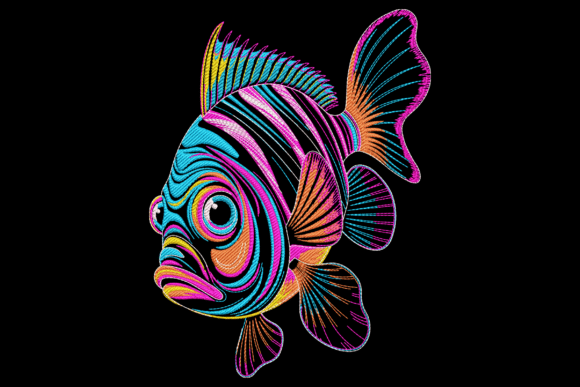
Striped Tropical Fish
A Craft Fair Designer’s First Look: Bold, Playful, and Instantly Recognizable
As someone who’s stitched hundreds of designs for weekend markets, Etsy shops, and boutique wholesale lines, my first impression of Striped Tropical Fish is refreshingly clear: it’s bold without being loud, playful without feeling childish, and charming without leaning into cliché. It lands squarely in that sweet spot—fun but intentional. Customers browsing a crowded craft fair booth don’t pause for subtlety; they respond to clarity, contrast, and character. This design delivers all three. Its striped motif adds rhythm and movement, while the tropical fish shape reads instantly—even at 3 inches tall on a tote strap or apron pocket.
Where Striped Tropical Fish Shines (and Where It Needs Care)
Not every embroidery file translates equally across product types. Here’s how Striped Tropical Fish performs where it matters most:
- Tote bag design: Ideal as a centered chest emblem or side-panel accent. The stripes pop against natural canvas or indigo denim, and its compact silhouette avoids overwhelming the fabric.
- Apron embroidery: Works beautifully above the pocket or along the waistband. Its cheerful energy complements kitchen and gardening themes—and stands out among more traditional floral or monogrammed aprons.
- Tea towel embroidery: A standout when placed near the corner or folded hem. Just be mindful: dense stitch areas may flatten texture on thick terry cloth. Test on your exact towel fabric first.
- Embroidered patch: Excellent candidate for iron-on or sew-on patches. Clean outlines and balanced negative space ensure crisp edges after cutting and sealing.
- Caps and curved surfaces: Use caution. The fish’s rounded body can distort on low-profile caps unless digitized with gentle underlay and reduced stitch density. Always run a test on scrap cap fabric.
- Fabric pouches & pillow covers: Highly effective as a single focal point—especially on linen, cotton canvas, or light quilting cotton. Avoid pairing it with busy prints; let the fish carry the visual weight.
Real-World Selling Strengths
Striped Tropical Fish isn’t just pretty—it’s sellable. At craft fairs, I’ve watched customers gravitate toward pieces that feel both handmade and cohesive. This design reads as intentionally curated—not generic clip art. That perception lifts perceived value. When stitched on an organic cotton market bag with contrasting thread (think coral on navy or lime on oat), it signals care, color confidence, and creative consistency. For Etsy sellers, it photographs cleanly: no tiny lettering to blur, no fragile filigree to lose in shadows. Its clean shape scales well from thumbnail to lifestyle mockup—making it strong for digital listings and printable mockups alike.
Production Practicalities Every Small Shop Owner Should Know
Before batch-stitching your first 50 units, consider these hands-on notes:
- Test the embroidery file on scrap fabric—especially if using textured towels, dark fabrics, or stretchy knits. What reads clearly on screen may vanish into pile or bleed on black cotton.
- Check thread contrast deliberately. Stripes demand legibility. A pale yellow stripe on cream fabric? Likely invisible. Go bolder: cobalt on ecru, kelly green on charcoal.
- Review spacing and stitch density. Overly tight fills in the fish’s eye or fin tips risk puckering on lightweight fabrics. If your file includes dense satin stitches in small zones, consider simplifying or adjusting underlay.
- Confirm hoop size and stabilizer needs. A compact fish may fit a 4x4 hoop—but verify. And never skip stabilizer on tea towels or woven cottons; even light tear-away helps maintain crispness.
- Create at least one real mockup before listing or packing for the fair. Seeing Striped Tropical Fish stitched on your actual tote bag reveals how it drapes, how light catches the thread, and whether it feels “done” or “almost there.”
- Compare fabric colors side-by-side. A design that sings on ivory linen may mute on oatmeal canvas. Keep swatches handy during production.
- Confirm commercial licensing status. Since you’re selling finished products—not just the digital embroidery file—you need explicit permission for commercial embroidery use. Don’t assume “machine embroidery design” implies resale rights.
Booth Impact & Buyer Engagement
In a sea of handmade product, Striped Tropical Fish creates instant visual rhythm. Place three items together—a striped fish on a tea towel, a matching embroidered patch pinned to a denim apron, and a small pouch with the same motif—and you build brand cohesion without logos or labels. Customers notice repetition. They remember delight. And when that delight is paired with obvious craftsmanship (clean tension, thoughtful thread choices, confident placement), engagement rises: questions get asked, stories get shared, and sales follow.
Careful-Use Notes for Long-Term Consistency
This design shines brightest when treated with intention—not automation. Avoid shrinking it below 2.5 inches wide: tiny stripes lose definition, especially on textured towels or dark fabric. Steer clear of heavy embellishment around it (e.g., beads or sequins) unless part of a deliberate collection theme—Striped Tropical Fish carries its own personality. And remember: curved surfaces (caps, curved pillow edges, rolled hems) require re-hooping finesse and possibly manual adjustment. What works flawlessly on a flat tote bag won’t always translate without testing.
Final Thought for Creative Entrepreneurs
Striped Tropical Fish isn’t just another fish-themed embroidery file. It’s a versatile, mood-lifting design asset—one that supports your brand voice whether you lean modern, coastal, quirky, or quietly artisanal. Used thoughtfully, it strengthens your booth display, deepens buyer connection, and elevates every handmade product it touches. But its charm is earned—not assumed. So stitch mindfully, test boldly, and let that striped tail flick its way into your next best-selling collection.