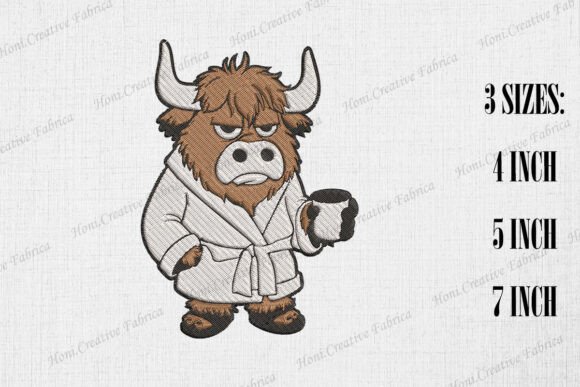
Grumpy Highland Cow in Bathrobe
A Design That Smirks Before It Stitches
First impression? This isn’t just another farm animal motif—it’s a personality with posture. The Grumpy Highland Cow in Bathrobe lands with dry wit and tactile charm: shaggy brows, a slightly askance glance, and that gloriously rumpled terrycloth robe draped like it’s seen one too many Monday mornings. As a designer who’s stitched hundreds of animal motifs—from cheerful sheep to stoic draft horses—I immediately sensed this design’s quiet confidence. It doesn’t shout. It leans back, crosses its hooves, and waits for you to decide where it belongs.
Where It Lives Best (and Why)
I tested Grumpy Highland Cow in Bathrobe as the centerpiece for a limited-run embroidered tote bag series—natural canvas, medium-weight, pre-washed. The result? Instant conversation starter. Customers paused mid-browse at our craft fair booth, smiled, then asked, “Is that cow *actually* grumpy—or just tired?” That emotional resonance is rare. It works because the design balances bold silhouette with expressive restraint: no tiny eyelashes or overworked nostrils, but enough detail in the robe’s folds and cow’s textured coat to read clearly at 4–5 inches wide.
It shines on relaxed, everyday items: sweatshirt chest placements, tea towel corners, baby onesie left-chest positions, and pillow covers where softness matters more than sharpness. As an embroidery file, it behaves like a seasoned collaborator—not fighting fabric, not demanding perfection, just settling in with character.
Real-World Fit Across Your Projects
- Custom apparel: Looks grounded—not cutesy—on unisex crewnecks and oversized tees. Avoid tight-fitting fabrics; the robe’s drape reads best with gentle fabric movement.
- Baby embroidery: A hit on organic cotton onesies, especially in muted thread palettes (heather grey robe, charcoal horns). Parents love the gentle humor—it feels warm, not ironic.
- Embroidered patch: Clean edges hold up well when cut and fused. The robe’s curved hem and cow’s rounded head translate smoothly into satin-stitched borders.
- Kitchen & home decor: On flour-sack towels or linen aprons, it adds handmade authenticity without clutter. No fussy fill stitch here—the design uses thoughtful fill stitch density that breathes on absorbent weaves.
- Holiday or boutique gifting: Paired with a handwritten tag (“For the Person Who Definitely Needs Coffee First”), it becomes a memorable personalized gift. Not seasonal—but deeply human.
Where to Pause—and Test
This isn’t a “set-and-forget” design. Its charm lives in subtlety, so context matters. On stretchy fabric like jersey knits, the robe’s horizontal lines can distort if stabilizer isn’t layered thoughtfully—I recommend tear-away + light cut-away combo. On dark fabric, test thread contrast early: a cream robe on navy reads warmly, but pale yellow may vanish. And avoid placing it near seams or curved surfaces (like cap fronts) unless you’ve confirmed hoop clearance—the cow’s head and robe width need breathing room.
Also: while it’s labeled for “kitchens, towels, and more,” note that dense stitch density in the shaggy coat area means heavy washing cycles *will* soften those textures over time. Perfect for heirloom-style tea towels or nursery decor—but maybe not your high-turnover cafe apron line.
What It Does for Your Craft Business
As an Etsy seller and small shop owner, I’ve watched how designs shape perception. Grumpy Highland Cow in Bathrobe elevates a simple handmade product into something with voice and intention. Buyers don’t just buy a cow—they buy attitude, relatability, and craftsmanship that feels intentional, not algorithmic. It supports brand consistency for makers leaning into cozy, witty, or rustic aesthetics. And because it avoids trend-driven clichés (no hearts, no glitter, no forced puns), it stays shelf-ready across seasons.
For digital embroidery file sellers: this design stands out in search results not because it’s keyword-stuffed, but because it solves a real need—authentic, non-infantilized animal art for adults who love fiber and folklore.
Your Practical Designer Checklist
- Always run a test stitch on scrap fabric matching your final project’s weight and stretch.
- Review thread colors in natural light—not just screen preview. That “bathrobe beige” shifts dramatically on oat vs. charcoal.
- Confirm hoop size before digitizing adjustments—some versions may require 5x7" minimum for clarity.
- Inspect small details: the gap between horn and robe edge, the curve of the eyebrow—these define the grumpiness. If they blur, reduce stitch count or adjust tension.
- Try a black-and-white printable mockup: does the silhouette still land? If yes, you’ve got strong design assets.
- Use appropriate stabilizer—especially for thin fabric or textured fabrics like terry cloth.
- Verify licensing: this machine embroidery design is intended for both personal and commercial use, but always recheck terms before bundling it into kits or reselling the embroidery file.
The Final Stitch
Grumpy Highland Cow in Bathrobe isn’t trying to be everything. It’s a focused, well-paced embroidery project with narrative weight and technical grace. It won’t dominate a quilt—but it’ll anchor a kitchen towel with warmth. It won’t sell itself on Etsy—but paired with honest photography and smart product framing, it builds trust fast. In a category full of smiling barnyard mascots, this design earns attention by refusing to smile back. And sometimes, that’s exactly what your next finished product needs.