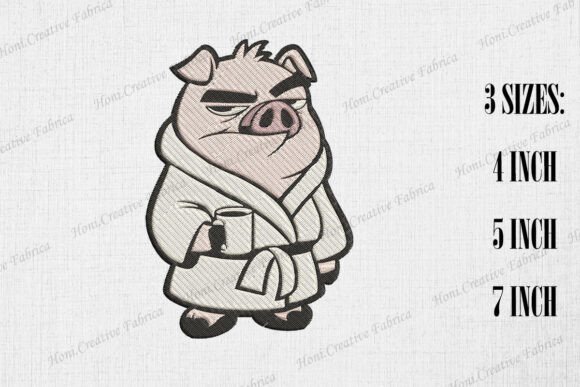
Grumpy Pig in Bathrobe
A Design That Smirks Before It Stitches
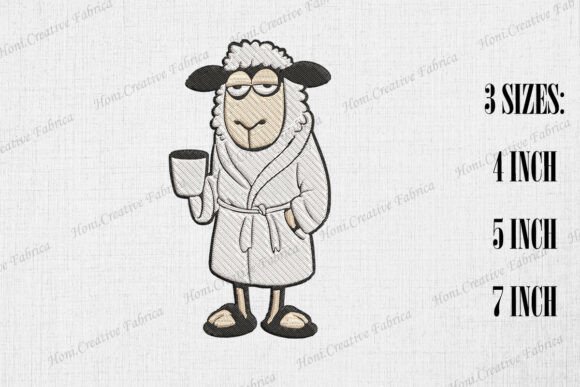
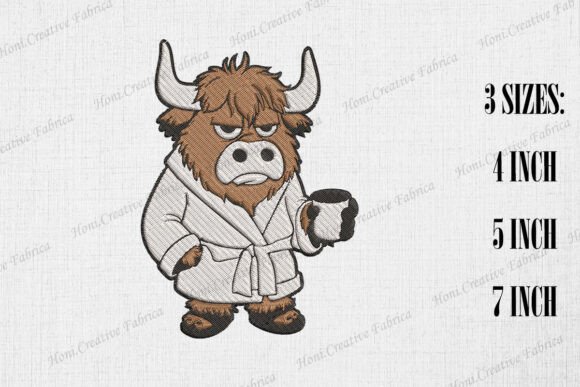
First impression? This isn’t just another farm animal motif—it’s a personality with pajamas. Grumpy Pig in Bathrobe lands with dry wit and quiet charm: a rounded, slightly slumped pig wrapped in a loosely tied robe, one hoof tucked, eyes narrowed just enough to suggest mild skepticism about your morning coffee—or your embroidery hoop size. It’s not cartoonish; it’s character-driven. The shape is compact but expressive, built for readability at 3–4 inches tall—ideal for a sweatshirt chest placement, a baby onesie front, or the center of a linen tea towel. As a machine embroidery design, its strength lies in restraint: no fussy outlines, no over-rendered snout wrinkles, no tiny buttons begging to vanish in fill stitch. That matters—especially when you’re stitching 50 custom tote bags for a local boutique launch.
Where It Shines (and Where It Pauses)
I tested Grumpy Pig in Bathrobe across three real projects: a heavyweight cotton apron for a baker’s pop-up stall, a soft organic cotton onesie for a newborn gift, and a loop-woven kitchen towel for holiday gifting. On the apron? Perfect. The robe’s folds translated cleanly in satin stitch, the pig’s expression held up even at 3.8 inches wide, and customers paused mid-aisle—not because it was loud, but because it felt *human*. On the onesie? Success—but only with lightweight cutaway stabilizer and reduced top tension. Thin fabric + dense fill in the robe’s lap area = slight puckering without support. On the towel? Slightly less crisp definition in the pig’s ear detail, thanks to the loops catching stray stitches—so I adjusted underlay and added a light tear-away topper. Lesson: Grumpy Pig in Bathrobe thrives on stable, medium-weight fabrics. It’s forgiving on t-shirts and tote bags, respectful on baby embroidery, and quietly confident on home decor. But skip it on highly textured knits, curved cap fronts, or ultra-sheer voile unless you’re willing to digitize minor cleanup passes yourself.
What Buyers Actually See—and Why It Matters
Your customer doesn’t see stitch count. They see whether the pig looks like it belongs on their product—or whether it looks pasted on. Grumpy Pig in Bathrobe reads as handmade, not mass-produced, because its proportions breathe: generous negative space around the figure, balanced weight distribution, and intentional simplicity in the facial features. That builds trust—especially for Etsy sellers or small shop owners pricing handmade products at a premium. When used on a personalized gift (“Aunt Marge’s Grumpy Pig Morning Towel”), the design invites warmth and inside-joke energy. It doesn’t scream “farm animals”—it whispers “cozy realism.” That subtlety makes it adaptable across seasons and audiences: equally at home in a nursery (paired with neutral thread) or a holiday kitchen set (stitched in deep forest green and cream).
Design Notes Every Embroiderer Should Check First
- Test before committing: Run Grumpy Pig in Bathrobe on scrap fabric matching your final project’s weight and stretch—even if it’s just a 2x2 swatch. Watch how the robe’s drape holds up in fill stitch.
- Stabilizer isn’t optional—it’s part of the design: Medium cutaway for knits, tear-away for stable wovens, and a light film topping for towels or napped fabrics.
- Thread color contrast changes everything: On dark fabric, use matte white or ecru for softness; on light, try charcoal gray instead of black for subtlety. Avoid neon threads—they clash with the design’s dry humor.
- Hoop size matters more than you think: If your hoop is tight around the design’s outer edge, the pig’s posture may distort. Leave at least ¼ inch clearance all around.
- Review stitch density visually: Zoom into the digital embroidery file—look for overlapping satin columns in the robe or heavy underlay beneath the snout. Too much density = stiffness; too little = loss of shape.
- Check licensing for commercial use: Since this is a digital embroidery file marketed for apparel and home goods, confirm whether your license covers resale of finished embroidered items or just personal use.
Not Just Cute—Strategically Useful
As a designer who sources embroidery files for client-branded merchandise, I keep Grumpy Pig in Bathrobe in my “quiet winners” folder—not because it’s flashy, but because it converts. It works in printable mockups without looking flat. It scales cleanly from 2.5 inches (for a patch or cap) to 5 inches (for a pillow cover). It pairs effortlessly with minimalist typography or other low-detail motifs—no visual competition. And yes, it fits neatly within the Farm Animals category, but it sidesteps cliché by leaning into mood over motif. That’s valuable for creative entrepreneurs building cohesive design assets: one pig, multiple contexts, zero rebranding needed.
Final Thought: It’s Not About the Pig—It’s About the Pause
The best embroidery designs don’t just decorate—they create a micro-moment of recognition. Someone sees Grumpy Pig in Bathrobe on a friend’s sweatshirt and smiles before they even register why. That’s the sign of a well-considered machine embroidery design: clear intent, honest execution, and room for the viewer to project their own story onto it. Use it where comfort meets character—in baby embroidery that feels thoughtful, in custom apparel that avoids trend fatigue, in holiday embroidery that leans into warmth instead of glitter. Just remember: every finished product carries your name. So stitch it right, test it twice, and let the pig do the rest.