Doodle Dog: A Craft Fair Designer’s Honest Review
First Impression: Whimsy That Wins at 10 Feet
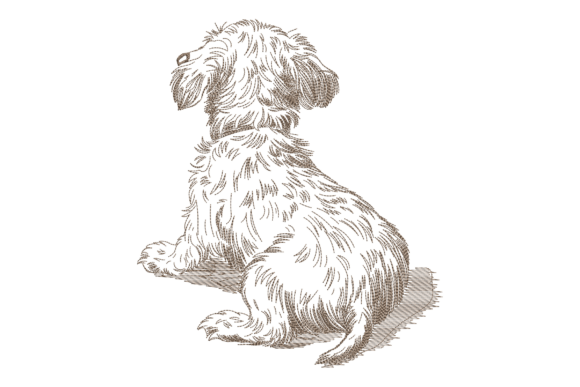
As an embroidery designer who’s packed and unpacked more craft fair booths than I can count, my gut reaction to Doodle Dog is immediate: it’s charming, unpretentious, and instantly legible. The name alone signals playfulness—not a photorealistic Labrador or a formal portrait, but something hand-drawn, energetic, and full of personality. That’s gold for handmade markets. Customers don’t pause for subtlety at a bustling fair—they respond to warmth, clarity, and joy. Doodle Dog delivers that in spades. It reads as modern-cute with a hint of farmhouse whimsy—friendly enough for kids’ items, refined enough for boutique tea towels, and bold enough to hold its own on a market bag.
Where Doodle Dog Shines on Real Craft Fair Products
In my booth setup—tote bags front-and-center, aprons draped over a wooden rack, tea towels folded beside embroidered patches—I test every design for *stopping power*. Doodle Dog works strongest where charm meets utility:
- Tote bag design: Centered on the front panel (4–5" wide), it reads clearly from across the aisle—no squinting needed. Its rounded lines and open negative space prevent visual clutter, even on busy canvas.
- Apron embroidery: Placed just above the pocket or centered on the bib, Doodle Dog adds instant character without overwhelming the garment’s function. It feels handmade, not mass-produced.
- Tea towel embroidery: On linen or cotton toweling, the design’s lightness keeps it from stiffening the fabric. Unlike dense floral motifs, it stitches cleanly even on textured weaves—if stabilized properly.
- Embroidered patch: This is where Doodle Dog becomes a small-shop powerhouse. Iron-on or sew-on, it’s versatile for branding, gifts, or customizing denim jackets mid-fair.
- Pillow cover & fabric pouch: At 3–4" wide, it anchors the piece without dominating. Its asymmetry and doodle energy make it feel intentional—not generic clip art.
What Holds Up Online—and What Needs Testing
Etsy sellers and digital embroidery file buyers rely heavily on mockups. Doodle Dog photographs well: its clean outlines and balanced fill areas translate reliably into printable mockups and listing thumbnails. But—and this matters—it’s not “set-and-forget.” I always generate at least three real mockups before listing: one on natural cotton, one on dark heather grey, and one on a textured kitchen towel. Why? Because Doodle Dog’s appeal lives in contrast and clarity—not density. If thread colors blend into the background or stitch density flattens its sketch-like texture, the magic disappears.
Production Reality Check: Practical Notes for Sellers
Before cutting fabric or loading hoops, here’s what I verify for every Doodle Dog run:
- Test on scrap fabric first—especially if stitching on terry cloth, denim, or curved cap surfaces. Even playful designs misbehave on unstable substrates.
- Check thread contrast carefully. Light threads on light fabrics often vanish under fair lighting; dark threads on dark fabrics lose definition. A warm mustard or slate blue often lifts Doodle Dog better than stark black or white.
- Review spacing and stitch density. Doodle-style art can tempt designers to overfill—avoid that. Let the “sketch” breathe. Too much fill = stiff fabric + skipped stitches on towels.
- Confirm hoop size and stabilizer needs. Most versions will fit a 4x4 hoop, but if yours includes a tiny collar detail or paw print accent, double-check clearance. Tear-away stabilizer works for most cottons; cut-away is safer for knits or stretchy tote linings.
- Create at least one finished product before the fair—preferably stitched on your actual tote bag fabric. Does it drape right? Does the dog’s expression stay readable after washing? That one sample saves hours of post-fair rework.
Careful-Use Notes Every Embroidery Business Owner Should Know
Doodle Dog is forgiving—but not foolproof. Avoid these pitfalls:
- Don’t shrink it below 2.5"—tiny eyes or ear details blur fast, especially on textured towels or dark fabric.
- Avoid dense layers on thick fabric like canvas market bags unless you’ve tested stabilizer + thread combo thoroughly. Stitch density builds heat and friction.
- Curved surfaces (caps, pouches) demand precise hooping. A slight pucker distorts the doodle’s lighthearted flow—so practice on scrap caps first.
- No lettering included in the description, so no worries about tiny fonts—but if you add custom text (e.g., “Biscuit & Co.”), keep it minimal and outside the main motif.
Why Doodle Dog Strengthens Your Booth & Brand
In a sea of rustic quotes and minimalist florals, Doodle Dog stands out by feeling *human*—like it was drawn by hand, then translated thoughtfully into stitch. That authenticity builds trust. Buyers linger longer. They ask, “Did you draw that?” That’s your opening to share your process—and sell more. It also scales beautifully: one embroidery file becomes a dozen small shop products (patches, keychains, pillow covers) without diluting your brand voice. And because it’s rooted in the Dogs category—a perennial favorite for pet lovers, gift shoppers, and animal-rescue fundraisers—it taps into reliable emotional demand.
Final Thought: Charm Is a Selling Tool—But Clarity Is Currency
Doodle Dog isn’t just cute. It’s commercially smart: simple enough for fast production, expressive enough to spark connection, and flexible enough to anchor multiple product lines. As a machine embroidery design, it respects the limits of home and commercial embroidery machines while delivering unmistakable handmade quality. Just remember—the best craft fair product isn’t the most complex. It’s the one customers *feel* before they even touch it. Doodle Dog does that. Now go test it on scrap, refine your thread palette, and get ready to smile when someone points and says, “I need that dog on my apron.”